Featured in our calendar “2027 North Carolina Through the Years” for August
If you strip NASCAR down to its essentials—cars, speed, competition—you miss the part that makes it distinctly North Carolinian. The sport didn’t begin in boardrooms or stadiums. It began on narrow roads, under pressure, with drivers who were less interested in trophies than in not getting caught.
During Prohibition, the mountains of North Carolina became a network of unofficial routes for transporting illegal liquor. Drivers modified their vehicles to handle sharp turns, steep grades, and sudden acceleration. It wasn’t enough to be fast in a straight line; you had to be controlled, adaptable, and familiar with terrain that offered no margin for error.
Those conditions produced a certain kind of driver. Not reckless, as the stereotype might suggest, but highly disciplined. Every movement had consequences. A mistake didn’t mean losing a race—it meant losing everything.
When NASCAR was formally established in 1948, it didn’t invent that skill set. It organized it. Rules replaced improvisation. Tracks replaced backroads. What had been informal became structured, but the DNA remained intact.
North Carolina never lost its central role in that evolution. The concentration of teams and technical expertise around Charlotte turned the region into the sport’s operational core. You can see it in the density of race shops, in the engineering facilities, in the way talent circulates through the area. Even as NASCAR expanded nationally, its center of gravity stayed put.
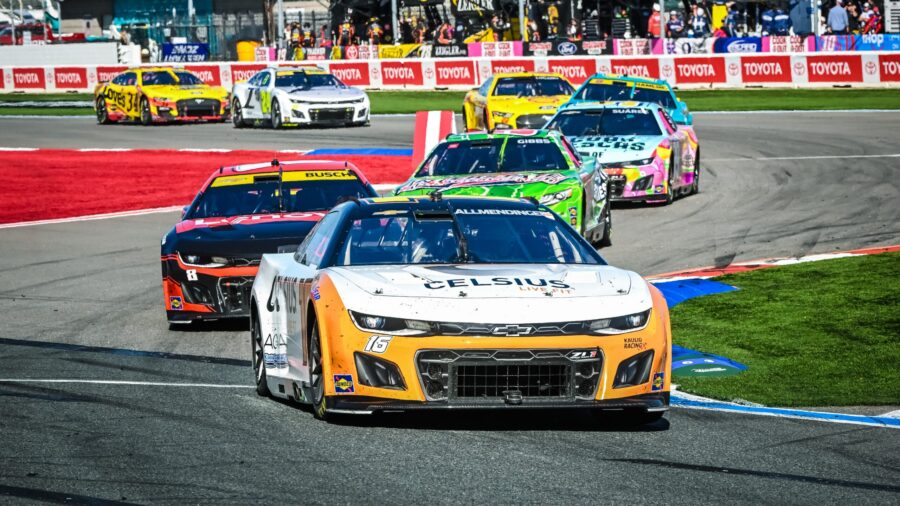
At Charlotte Motor Speedway, that legacy becomes visible. The track is not just a venue; it’s a focal point where history, technology, and fandom converge. Race weekends compress decades of development into a few hours of competition.
What makes NASCAR compelling is not just the speed but the strategy layered beneath it. Races are long enough to require adjustment. Pit stops introduce variables. Weather changes conditions. Teams make decisions in real time, balancing risk against opportunity.
It’s tempting to think of racing as chaotic, but at its highest level, it is controlled complexity. The drivers who succeed are those who understand how systems behave under stress.
Healthcare decisions, particularly within Medicare, share that complexity. Options appear straightforward at first glance, but their interactions over time create a system that requires careful navigation. Choosing a plan is less like picking a product and more like setting a trajectory.
Blue Moon Benefits Group approaches that process with an emphasis on interpretation. Serving Clemmons and High Point, they help individuals move beyond surface-level comparisons and understand how coverage functions in practice. The goal is not speed—it’s accuracy. In both racing and planning, the wrong decision made quickly is still the wrong decision.