Featured in our calendar “2027 North Carolina Through the Years” for December
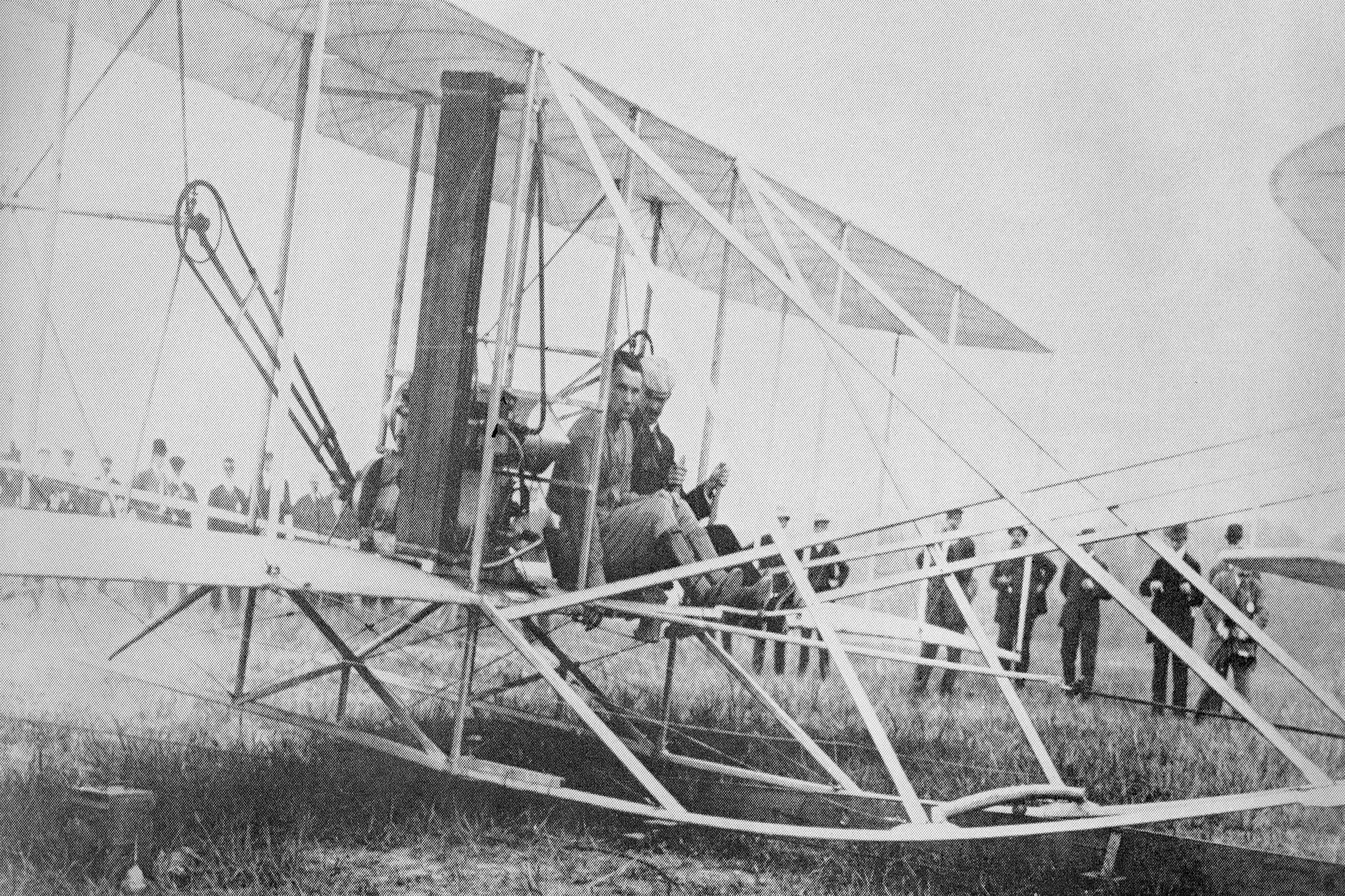
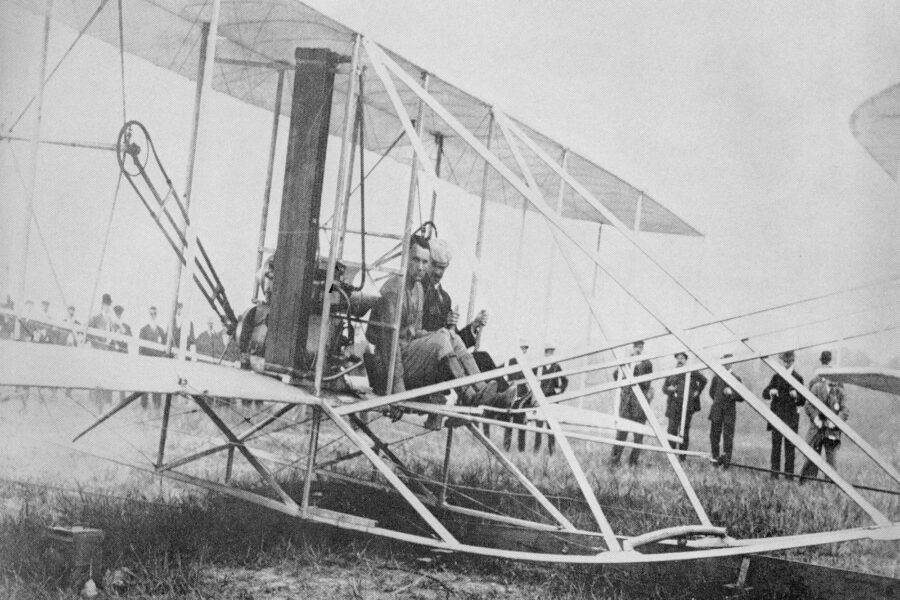
The first powered flight at Kitty Hawk, North Carolina, is often described in terms of its brevity: twelve seconds, 120 feet. Those numbers are accurate, but they obscure what actually happened on December 17, 1903. The achievement by Orville Wright and Wilbur Wright was not distance—it was control.
Attempts at flight had occurred before. Gliders existed. Engines existed. What had not been successfully integrated was a system that allowed a pilot to manage movement in three dimensions. The Wright brothers approached the problem methodically, focusing as much on control mechanisms as on lift and propulsion.
Their choice of the Outer Banks was strategic. The consistent winds near Kitty Hawk provided the conditions necessary for repeated testing. The isolation reduced distractions. Failure could occur without consequence beyond the immediate experiment.
What distinguishes their work is not a single breakthrough, but a sequence of refinements. Each test informed the next. Adjustments were made incrementally. The final flight was less a moment of discovery than the culmination of a process.
That process is what scaled. Aviation did not advance because of one successful attempt; it advanced because the underlying system could be replicated, modified, and improved. The initial flight proved feasibility. Everything that followed proved sustainability.
This distinction—between proving something once and proving it can continue—is critical in many areas. Healthcare planning is one of them. Selecting a Medicare plan that works in the short term is not sufficient if it fails to adapt to future needs.
Blue Moon Benefits Group works with individuals to think beyond the initial decision. Serving Clemmons and High Point, they focus on how coverage functions over time, helping clients understand the implications of their choices before those implications become constraints.
The Wright brothers did not set out to create a single successful flight. They set out to create a repeatable system. The difference between those goals is subtle at first, but it determines whether progress stops or continues.